

Heard the buzz about that ultra-smooth, glowing skin and wondered what the secret is? Chances are, you've stumbled upon dermaplaning. But let's be real, the idea can be intimidating. Will it make your peach fuzz grow back thicker? Is it just a fancy word for shaving? And are you really meant to take a blade to your own face? The myths and questions can stop you before you even start.
It’s time to ditch the confusion. Think of this as your complete reset button for skincare knowledge. We’re breaking down everything you need to know, from how this game-changing technique exfoliates your skin to how it makes your makeup glide on flawlessly. We’ll bust the myths, compare at-home vs. professional treatments, and give you a safe, step-by-step guide to achieving that brilliant glow. Get ready to feel confident and in control of your skin.
Key Takeaways
- Discover how this simple technique provides two key benefits: deep physical exfoliation and the removal of soft vellus hair (peach fuzz).
- Get ready for a game-changing glow. Uncover the benefits of smoother skin texture and a flawless makeup base.
- Decide which path is right for you. We break down the key differences between a professional treatment and safe, convenient at-home dermaplaning.
- Master the at-home technique with our step-by-step guide to getting professional-level results safely and easily.
- Know before you glow. Learn about the potential risks and find out if this treatment is a good fit for your specific skin type.
What is Dermaplaning? (And What It Isn't)
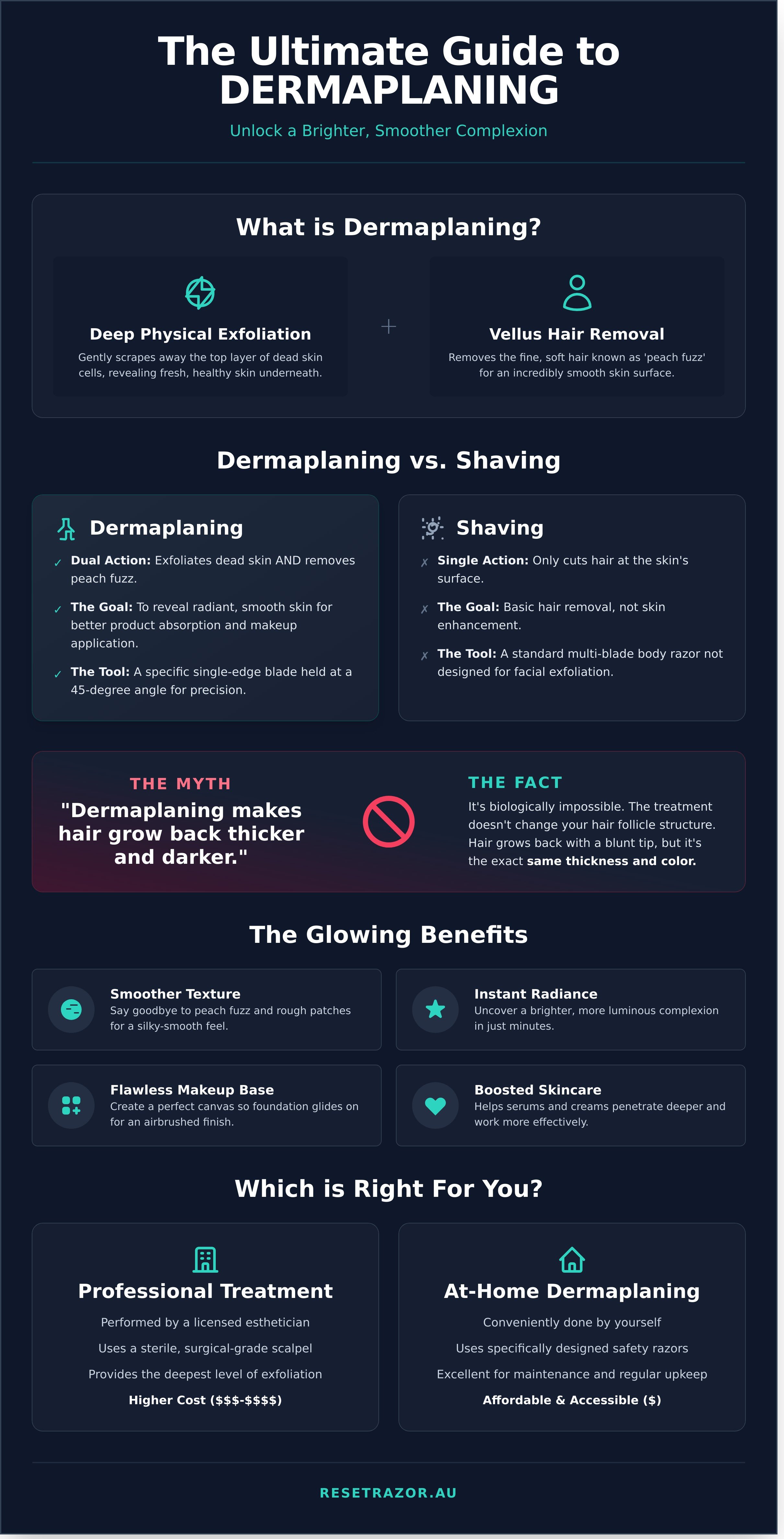
Let's get straight to it. Dermaplaning is a physical exfoliation method that uses a sterile, single-edge blade to gently scrape away the top layer of dead skin cells and fine vellus hair from your face. You probably know vellus hair by its more common name: ‘peach fuzz’.
The goal is simple and brilliant: to reveal the incredibly smooth, fresh, and radiant skin hiding underneath. This isn't about aggressive skin removal; think of it as a reset for your complexion. It's a far gentler approach than intense clinical procedures like Dermabrasion, which is a medically-supervised resurfacing technique. Instead, dermaplaning is your ticket to a brighter canvas for skincare and makeup.
Dermaplaning vs. Shaving: The Key Differences
While both involve a blade, comparing dermaplaning to your average body shave is like comparing a precision tool to a sledgehammer. They are designed for completely different jobs. Your standard multi-blade body razor is built to do one thing: cut hair at the skin's surface. That's it.
Dermaplaning is a game-changer because of its dual action. The specific, single-edge blade is held at a 45-degree angle to not only remove peach fuzz but also to lift away the build-up of dead skin that dulls your complexion. This exfoliation is the key benefit that a quick leg shave just can't deliver.
Myth-Busting: Does It Make Hair Grow Back Thicker?
Let's tackle the biggest myth head-on: No. Absolutely not. The idea that your peach fuzz will return as a thick, dark beard is one of the most persistent beauty myths out there, and it’s simply not true.
Here’s why: Dermaplaning doesn’t change the structure of your hair follicle, which is deep beneath the skin and solely responsible for your hair’s texture and growth rate. When the vellus hair is cut, the new tip is blunt. As it grows back, this blunt edge can feel slightly different or more noticeable for a short time, but the hair itself is the exact same thickness and colour it has always been. You can finally put that fear to rest.
The Glowing Benefits: Why Everyone is Talking About It
So, what’s all the fuss about? Dermaplaning is more than just a passing trend; it's a simple, effective way to get that 'lit-from-within' glow, right from your own bathroom. This technique isn't about complicated tools or harsh chemicals. It's about revealing the brilliant skin you already have. The results are instant, satisfying, and a total game-changer for your skincare and makeup routine.
Here are the key benefits that have everyone hooked:
- Instant Radiance: Uncover brighter, more luminous skin in minutes.
- Smoother Texture: Say goodbye to peach fuzz and rough patches.
- Better Makeup Days: Create the perfect canvas for foundation.
- Boosted Skincare: Help your expensive products work harder.
Instant Exfoliation for Brighter Skin
At its core, this treatment is a powerful form of physical exfoliation. The blade gently glides over your skin, sweeping away the outermost layer of dead skin cells and debris that can leave your complexion looking dull and tired. This process immediately reveals the fresh, healthy skin underneath, resulting in a brighter, more even-toned appearance and helping to soften the look of fine lines over time.
Flawless Makeup Application
Ever notice how foundation can sometimes cling to the tiny hairs on your face, creating a cakey or uneven finish? By removing that fine vellus hair (or 'peach fuzz'), you create an incredibly smooth canvas. Your makeup will glide on seamlessly, blend more easily, and sit beautifully on the skin for a professional, airbrushed look that lasts all day. It’s the ultimate prep step for a flawless finish.
Enhanced Skincare Product Absorption
Ready to get more value from your skincare? By removing the barrier of dead cells and fine hairs, you clear the path for your products to do their job properly. This means your serums, moisturisers, and treatments can penetrate deeper and work more effectively. This benefit is a key reason why so many are turning to this treatment, as highlighted in this comprehensive WebMD guide to dermaplaning. It’s the perfect way to reset your skin before applying your most important products.
Professional vs. At-Home Dermaplaning: Which Is Right for You?
So, you’re ready for seriously smooth skin, but you're stuck at a crossroads: book a clinic appointment or DIY? Let’s break it down. Both professional and at-home options are fantastic-the right choice simply depends on your budget, schedule, and comfort level.
The Professional Experience
Think of this as the gold standard. Performed by a licensed aesthetician or dermatologist, this treatment uses a sterile, surgical-grade scalpel for precise and deep exfoliation. As Johns Hopkins Medicine explains dermaplaning, the goal is to gently scrape off the top layer of dulling dead skin cells. Expect to pay between A$80 and A$150 per session in Australia, which typically lasts 30-45 minutes and leaves you with an unmatched, immediate glow.
The At-Home Option
For those who love convenience and cost-efficiency, the at-home route is a game changer. This method is all about maintenance. Instead of a scalpel, you'll use a specially designed dermaplaning tool with built-in safety guards. This is key-it’s designed to reduce the risk of nicks and cuts, giving you the confidence to maintain that smooth finish between professional appointments or as your primary routine.
Cost:
Professional: A$80 - A$150 per session.
At-Home: The cost of a reusable tool and replacement blades.
Tool Used:
Professional: Sterile, surgical-grade scalpel.
At-Home: Specially designed facial razor with safety guards.
Results:
Professional: Deepest exfoliation, immediate and dramatic glow.
At-Home: Excellent for removing peach fuzz and maintaining smoothness.
Best For:
Professional: A first-time experience, special events, or a periodic deep treatment.
At-Home: Regular maintenance, budget-conscious users, and convenience.
The verdict? There’s no wrong answer. Many people start with a professional session to see the results and learn the feel, then switch to at-home tools for upkeep. Ultimately, the best path is the one that fits your lifestyle and helps you feel amazing in your own skin.
How to Dermaplane at Home: A Safe Step-by-Step Guide
Ready to get that glass-skin glow yourself? It’s totally achievable. The secret isn't just the tool, but the technique. Nailing the process from start to finish is what separates a brilliant result from irritation. Follow these simple steps for a safer, smoother dermaplaning experience and skin that feels like a total game-changer.
Step 1: Prep Your Skin
Think of your face as a canvas-you need a clean, clear surface for the best results. Proper prep is the key to a flawless session, ensuring the blade glides smoothly and preventing bacteria from causing unwanted breakouts.
- Always start with a clean face. We recommend a double cleanse to remove every trace of makeup, sunscreen, and grime. Pat your skin until it is completely dry.
- Work on a dry surface. Your skin must be totally free of oils, serums, or moisturisers. This gives the blade the best possible contact to work its magic.
- Get your hair out of the way. Use a headband or tie your hair back to keep the area clear and avoid any snags.
Step 2: The Technique
This is where precision matters. Go slow and be gentle-this isn’t a race. The goal is to use light, controlled movements to remove vellus hair (peach fuzz) and dead skin cells, not to apply heavy pressure.
- Hold the skin taut. Use your free hand to gently pull the skin tight. This creates a flat, smooth surface for the razor to glide over.
- Angle the blade correctly. Hold your tool at a 45-degree angle to the skin. This is the sweet spot for effective exfoliation without causing nicks.
- Use short, feathery strokes. Work in small sections, gliding the blade in a downward motion. Think light and gentle.
- Avoid repeating strokes. Only go over each area once per session to prevent over-exfoliation and irritation.
Step 3: Aftercare is Crucial
You've just revealed a fresh new layer of skin, so what you do next is critical. Your skin is now more absorbent and sensitive, making aftercare a non-negotiable step for healing, hydration, and protection.
- Soothe and hydrate immediately. Gently wipe away any residue and apply a calming, hydrating serum with ingredients like hyaluronic acid. For a curated selection of premium aftercare products, online beauty retailers like totaalbeauty.nl are a great resource.
- Pause the potent stuff. Avoid using harsh actives like retinoids, AHAs, or BHAs for at least 24-48 hours to let your skin barrier recover.
- Sunscreen is your best friend. This is the most important step. Your skin is extra vulnerable to sun damage. Apply a broad-spectrum SPF 50+ generously, especially under the Aussie sun.
Risks and Who Should Avoid Dermaplaning
Let's get real. While at-home dermaplaning is a game-changer for achieving seriously smooth skin, it’s not a one-size-fits-all solution. Knowing the potential risks and when to press pause is the smartest way to get that brilliant glow without any backlash. The good news? With the right technique and a quality tool, the risks are minimal and easily managed.
Being informed is the first step to getting flawless results, every time.
Potential Side Effects
Most side effects are minor, temporary, and a direct result of technique or aftercare. When done correctly, you can easily sidestep these common issues:
- Slight Redness: A little pinkness immediately after your session is completely normal. It’s just a sign of increased circulation to the area and should fade within an hour or two.
- Minor Nicks or Cuts: This is almost always a technique issue. Using a sharp, clean blade at the correct 45-degree angle on taut skin makes this highly unlikely. This is why a well-designed tool is non-negotiable.
- Post-Treatment Irritation: Your skin is freshly exfoliated and needs a little TLC. Skipping aftercare, like applying a hydrating serum and a solid SPF, can leave your skin feeling dry or irritated. Don't skip the final step!
When to Steer Clear
Dermaplaning is about revealing healthy, radiant skin-not aggravating existing problems. It’s crucial to hold off on this type of exfoliation if your skin is already compromised. Put the razor down if you're currently dealing with:
- Active Acne: Shaving over active pustules, breakouts, or cysts can spread bacteria across your face and make inflammation much worse. Wait until your skin has cleared.
- Skin Conditions: If you have inflammatory conditions like rosacea, eczema, or active psoriasis flare-ups, this treatment can trigger a reaction and cause serious irritation.
- Sunburn or Broken Skin: Never perform this on sunburnt, broken, or highly sensitised skin. Your skin barrier is already damaged, and it needs time to heal itself first.
Understanding your skin is the first step to a smarter routine. When your skin is calm and ready, the results are incredible. Ready for a reset? Explore our game-changing body razors.
Ready to Reset? Your Glow Awaits
Now you have the complete guide to dermaplaning. You know it’s a game-changing exfoliation method for sweeping away dead skin and vellus hair, revealing an instantly brighter complexion. Whether you opt for a professional treatment or master the technique at home, the key takeaway is clear: smoother skin creates the perfect canvas, allowing your skincare products to work more effectively than ever before.
That incredible feeling of smoothness shouldn't stop at your face. It’s time to ditch outdated stick razors and upgrade your entire routine. As a proudly Australian-owned and operated brand, we’re shaking up the industry with eco-friendly, planet-friendly shaving solutions engineered for a faster, smoother, and safer body shave. Your journey to brilliantly smooth skin, from head to toe, starts here. Ready for a smoother shave? Discover the Reset Razor for your body.
Frequently Asked Questions
How often should you dermaplane your face?
Less is more when it comes to a radiant glow. We recommend dermaplaning just once every 3 to 4 weeks. This gives your skin enough time to complete its natural regeneration cycle before the next session. Overdoing it can lead to irritation, so listen to your skin. If it feels sensitive, give it a little more time to reset. The goal is a smoother, brighter complexion, not a stressed-out one.
Does dermaplaning hurt?
Not at all! When done correctly, dermaplaning should be completely painless. Think of it as a light, gentle scraping sensation across your skin-not a sharp or painful feeling. The key is using a high-quality, single-blade razor designed specifically for the face and holding it at a 45-degree angle. If you feel any pain or stinging, you’re likely applying too much pressure. It’s all about a gentle touch for a super smooth result.
Can I use my regular body razor or face shaver for dermaplaning?
Absolutely not. This is one shortcut you don't want to take. Your multi-blade body razor is a game-changer for legs, but it’s too aggressive for your delicate facial skin. It's designed to cut coarse hair close, not gently exfoliate. Using one for this purpose can cause nicks, cuts, and serious irritation. Stick to a purpose-built, single-blade facial razor for a safe, effective, and brilliantly smooth finish. Different tools for different jobs!
Will dermaplaning help with acne scars?
Dermaplaning can be a brilliant tool for improving the *appearance* of superficial acne scars. By removing the top layer of dead skin cells, it helps to smooth out texture and can fade post-inflammatory hyperpigmentation (the dark spots left behind). However, it won't eliminate deep, pitted scars. Think of it as a great way to create a smoother canvas and boost your skin’s overall radiance, making surface-level marks much less noticeable.
What's the average cost of a professional dermaplaning session in Australia?
Going pro in Australia will set you back a bit. A single professional dermaplaning session typically costs between A$75 and A$150. The exact price can vary depending on your location-a chic clinic in Sydney or Melbourne might be at the higher end of that range. Some clinics also bundle it with other treatments like a chemical peel or hydrating facial, which will increase the overall cost. It's a great treat, but at-home options offer brilliant results for less.
Can men do dermaplaning too?
Yes, absolutely! Skincare has no gender. Men can get incredible benefits from dermaplaning, especially for creating a smoother complexion and helping skincare products absorb better. It’s perfect for exfoliating areas where you don’t grow a beard, like the forehead, upper cheeks, and nose. It can also help prevent ingrown hairs and create a cleaner line around the beard. It’s a simple, fast way for anyone to reset their skin and achieve a fresher look.
For men seeking comprehensive care that covers both aesthetic treatments and overall wellness, specialized clinics are an excellent resource. These practices often address a wide spectrum of concerns, from skin health to more specific men's health topics. To see an example of a clinic with this dual focus, you can learn more about Dr. Sankeerth Reddy's Clinic.