

Let’s be honest. You’ve felt that post-shave panic. You go for a super smooth finish, only to be met with sharp, prickly stubble a day later. It feels coarser, looks darker, and you start to second-guess everything. It’s the one question that’s been passed down for generations: does hair grow back thicker after shaving? The amount of conflicting advice out there is enough to make you want to ditch the razor for good.
Well, the debate ends today. We’re here to give you the definitive, science-backed answer once and for all. Forget the myths and outdated beauty advice. In this guide, we'll explain the simple science behind hair growth, reveal why stubble feels the way it does, and show you how to finally achieve that lasting, effortlessly smooth shave you’ve been searching for. Ready to reset your routine?
Key Takeaways
- The answer to "does hair grow back thicker after shaving" is a hard no. We'll show you why it feels that way and what’s really happening.
- Understand how hair actually grows from the follicle. This simple biology lesson is the key to busting shaving myths for good.
- That prickly feeling isn't inevitable. We share the simple secrets to getting a genuinely smooth shave and making stubble less noticeable.
- It's not just about thickness. Find out the truth behind other common fears, like whether shaving makes hair grow back darker or faster.
The Final Verdict: Does Shaving Really Make Hair Thicker?
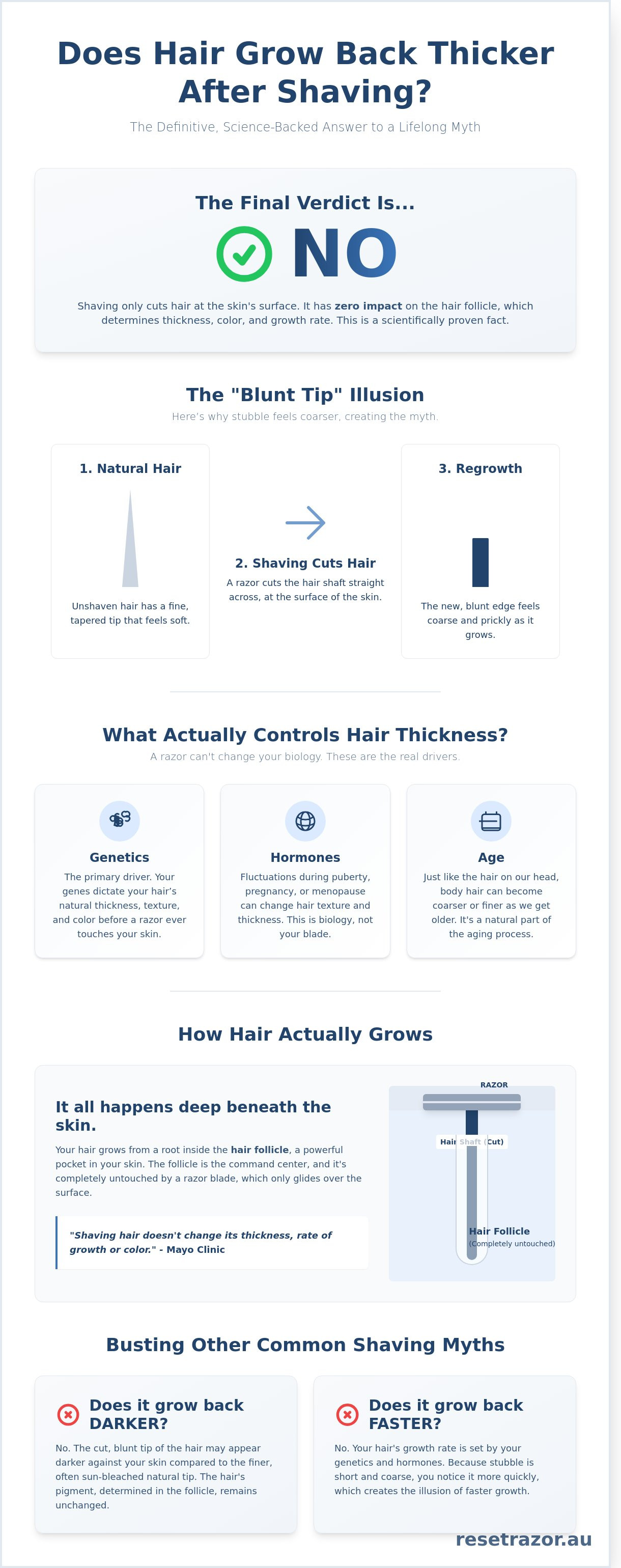
Let's cut to the chase and bust this myth for good. The final verdict on whether does hair grow back thicker after shaving is a resounding NO. It’s one of the most persistent beauty myths out there, passed down through generations, but it’s simply not true. Shaving is a surface-level game; it only cuts the hair at the skin's surface.
It has zero impact on the hair follicle buried beneath your skin. That follicle is the tiny powerhouse that actually determines your hair's thickness, colour, and growth rate. This isn't a new discovery; it's a fact that has been scientifically proven for decades, despite being one of the most common shaving myths around.
The 'Blunt Tip' Illusion: Why It Feels Thicker
So why does the myth live on? It all comes down to a simple illusion. Natural, unshaven hair has a fine, tapered tip that feels soft. When you shave, your razor cuts the hair shaft straight across, creating a blunt, flat end. As this blunt edge grows out and pushes through the skin, it feels coarser and more noticeable to the touch. Think of it like a sharpened pencil versus a flat-topped one-it’s the same pencil, just with a different end.
What Actually Controls Your Hair's Thickness?
If your razor isn't the culprit, what is? Your body's blueprint is already set, and a surface-level shave can't rewrite your biology. The real factors at play are much deeper:
- Genetics: This is the main driver. Your genes dictate your hair’s natural thickness, texture, and colour before a razor ever touches your skin.
- Hormones: Fluctuations during life stages like puberty, pregnancy, or menopause can absolutely change your hair. These hormonal shifts can make hair appear thicker or thinner, but it’s biology, not your blade.
- Age: Just as the hair on our heads changes over time, so does our body hair. It’s normal for it to become coarser or finer as we get older.
A razor is a brilliant tool for achieving smooth skin, but it can't alter your DNA or hormonal balance. The idea that shaving affects regrowth is one of the biggest misconceptions preventing people from getting an easy, smooth shave.
A Quick Biology Lesson: How Your Hair Actually Grows
To finally settle the debate on whether does hair grow back thicker after shaving, we need to look beneath the skin. It’s not magic; it’s biology. The answer isn't on the surface you shave-it’s hidden much deeper, in a brilliant little factory called the hair follicle.
Think of shaving as giving your body hair a haircut. It trims the hair at the skin's surface but does absolutely nothing to the production line underneath. Let's break it down.
Inside the Hair Follicle
Your hair doesn't grow from the tip. It grows from a root tucked inside a follicle, a tiny but powerful pocket deep in your skin. At the base of this follicle is the papilla, which is connected to blood vessels. This is the command centre, providing the nutrients that build each strand of hair. A razor blade glides over the top layer of skin; it never comes close to this complex system. Shaving simply can't alter the hair follicle, which is why, according to the Mayo Clinic, shaving hair doesn't change its thickness, rate of growth or colour.
The Three Phases of the Hair Growth Cycle
Your hair's life is a pre-programmed cycle, and shaving doesn't have a say in it. Every single hair on your body is at a different stage of this three-part process:
- Anagen (The Growing Phase): This is the active stage where hair is physically growing longer. It can last for weeks or even years, depending on the body part.
- Catagen (The Transition Phase): The hair follicle shrinks, cutting the hair off from its blood supply. Growth stops. This is a short, transitional phase.
- Telogen (The Resting Phase): The old hair rests while a new hair begins to grow beneath it. Eventually, the old hair sheds to make way for the new one.
This cycle dictates your hair's thickness, colour, and growth rate-not your razor. The question of does hair grow back thicker after shaving is answered by this simple biological fact: you're only trimming the dead part of the hair, leaving the living, growing part completely untouched.
How Shaving Compares to Other Hair Removal Methods
The feeling of your hair growing back has everything to do with the removal method you choose. It’s not about the hair actually changing-it’s about the shape of the hair tip when it reappears. So, when we ask does hair grow back thicker after shaving, the answer lies in comparing how different methods work. Let's break down the most common options to see why shaving is often the smartest, most convenient choice for body hair.
Shaving: Cutting Hair at the Skin's Surface
Shaving is a game changer for speed and convenience. It works by cutting the hair right at the surface of your skin, which creates a blunt, flat tip. This blunt edge is the real reason regrowth can feel coarse or prickly at first. As medical experts at Healthline confirm, shaving won't make your hair regrow any thicker or faster; it just affects the perception of the hair tip. The trade-off for this painless, instant smoothness is that regrowth appears a little quicker than with other methods.
- Pros: Fast, painless, affordable, and can be done anywhere, anytime.
- Cons: Regrowth is visible sooner due to the surface-level cut.
Waxing and Epilating: Pulling Hair From the Root
These methods pull the entire hair out from the follicle. Because a brand new hair has to form, it grows back with a fine, tapered tip. This is why regrowth can feel softer and take longer to appear. However, this approach isn't without its downsides. It can be painful (especially in sensitive areas) and often leads to irritation and pesky ingrown hairs as the new hair struggles to break through the skin.
- Pros: Longer-lasting results and regrowth feels softer.
- Cons: Often painful, can be expensive, and carries a high risk of ingrown hairs.
Depilatory Creams: Dissolving the Hair Shaft
Hair removal creams use chemicals to dissolve the hair protein at or just below the skin's surface. The result is similar to shaving, but because the hair is dissolved rather than cut, the tip can sometimes feel slightly softer upon regrowth. The biggest drawback? The strong chemicals can cause skin irritation, redness, or allergic reactions, making them a risky choice for anyone with sensitive skin.
- Pros: Painless and results can last slightly longer than shaving.
- Cons: Potential for chemical burns and skin irritation; often has a strong smell.
The Secret to a Silky-Smooth Shave (And Avoiding Prickly Stubble)
So, we’ve busted the myth. Shaving doesn’t change the thickness, colour, or growth rate of your hair. But that doesn’t change the fact that post-shave stubble can feel annoyingly prickly and rough. Why?
The answer isn't in your hair follicles-it's in your technique and, most importantly, your tools. A poor shave with a dull or badly designed razor creates a blunt, uneven edge on each hair, making regrowth feel sharper and more noticeable. The quality of your shave directly impacts how regrowth feels. Forget wondering does hair grow back thicker after shaving; it’s time to focus on getting a better, smoother cut from the start.
Why a Sharp Blade is Your Best Friend
Many multi-blade razors are designed to lift and pull the hair before cutting it. This tugging action can cause irritation and an uneven cut below the skin's surface, leading to that dreaded prickly feeling and potential ingrown hairs. A single, sharp blade is a game-changer. It provides a clean, precise cut right at the skin’s surface, minimising irritation and ensuring your skin stays smoother for longer.
The Reset Method: Your Step-by-Step Guide
Getting a flawless shave is easier than you think. It just takes a few simple steps to prep your skin and let your razor do its best work.
- Step 1: Exfoliate. Gently scrub the area to remove dead skin cells. This clears the way for the razor to get closer to the hair follicle for a smoother result.
- Step 2: Hydrate. Spend a few minutes in warm water. This softens both your skin and the hair, making them much easier to cut.
- Step 3: Lather Up. Apply a quality shaving gel or cream. This isn’t just for show-it provides essential lubrication for the blade to glide, protecting you from nicks and irritation.
- Step 4: Shave Smart. Use a clean, sharp razor and shave with light, gentle pressure. Let the blade do the work.
The Razor Makes the Difference
For too long, we've been using razors that weren't designed for us. Old-school 'stick razors' were created for the flat planes of a face, not the unique contours of legs, underarms, and bikini lines. It’s no wonder so many of us struggle with irritation and rough stubble.
An ergonomic razor designed specifically for the body allows for a closer, safer, and far more comfortable shave. The award-winning Reset Razor provides a consistently clean cut, drastically reducing the perception of thick, spiky stubble. It’s not about changing your hair-it’s about upgrading your hardware.
Ready to reset your routine and feel the difference?
Busting More Shaving Myths: Does It Grow Back Darker or Faster?
So, we've settled the big question: does hair grow back thicker after shaving? The answer is a clear no. But that myth doesn't usually travel alone. It often brings along its two equally frustrating friends: the fear of darker hair and the worry of faster regrowth. It’s time to ditch these outdated ideas for good.
Let's apply the same simple science to put these last two shaving anxieties to rest. Because a great shave should be about feeling confident, not stressed.
Myth: Hair Grows Back Darker
This is another classic optical illusion. When you shave, you cut the hair at its base, leaving a blunt tip. This newly emerged stubble has two things going against it:
- It's brand new. The hair hasn't had time to be naturally lightened by sun exposure, soap, or the environment. It’s showing its true, original colour.
- It's short and blunt. This new growth can look more prominent and concentrated against your skin, creating the appearance of a darker shade.
The truth is, your hair's pigment is created deep within the follicle, far beneath the skin's surface. A razor simply can't change your hair's DNA. What you see is just virgin hair in its most natural state.
Myth: Hair Grows Back Faster
It might feel like you're shaving more often, but we promise your hair isn't breaking any speed records post-shave. Shaving has absolutely no effect on the rate of hair growth. That speed is determined by your genetics and hormones-things a razor can't touch.
The reason it seems faster is that you’re noticing the growth sooner. A blunt, stubbly end pushing through the skin is far more noticeable to the touch than a soft, tapered end that has been growing for a while. It’s not growing faster; you're just feeling it at its earliest, bluntest stage.
Now that the myths are busted, you can focus on what really matters: getting a smooth, comfortable shave without the worry. Ready to upgrade from outdated fears and outdated razors? It’s time to reset your shaving routine with a tool designed for a better experience.
The Final Verdict: It's Time to Reset Your Shave
So, let's put this stubborn myth to bed for good. The answer to the age-old question, does hair grow back thicker after shaving, is a clear and scientific no. Shaving simply cuts the hair at the surface, creating a blunt tip that can feel coarse as it grows out-but it doesn't change your hair's actual thickness, color, or speed of growth. The real enemy of smooth skin isn't your hair; it's an outdated shaving tool that leaves you with prickly stubble.
Instead of worrying about myths, focus on the solution. Traditional stick razors were never designed for the curves of your body. That’s where the game changes. Ready to reset your shave? Ditch the prickly stubble for good with our game-changing razor.
Proudly designed in Australia for a faster, smoother body shave, its clever, eco-friendly design is better for your skin and the planet. Join thousands of happy customers who have finally found the secret to long-lasting smoothness. It's time to experience a shave that's truly brilliant, not a chore.
Frequently Asked Questions
Why does my leg hair feel like a cactus after I shave?
That prickly feeling happens because shaving cuts your hair at a blunt angle. As the hair grows back, the coarse, flat tip is the first thing to poke through your skin, making it feel sharp and stubbly. A close, comfortable shave with a sharp, high-quality blade is the game changer. It cuts the hair cleanly at the skin's surface, minimising that spiky sensation and keeping you smoother for longer. It’s time to reset your expectations.
Is it better for your hair to wax or shave?
It really comes down to your lifestyle. Waxing pulls hair from the root, so results last longer, but it can be painful, expensive (think A$50+ per session!), and lead to ingrown hairs. Shaving is the ultimate in convenience-it's fast, painless, and easy to do at home. With the right razor designed for your body, you can get an incredibly smooth finish without the fuss or the salon appointment. For everyday ease, a great shave wins.
How can I make my smooth shave last longer?
Want that smooth feeling to stick around? Start by exfoliating to clear away dead skin cells for a closer shave. Always use a fresh, sharp blade and a hydrating shave cream-never shave dry! For the closest finish, carefully shave against the direction of hair growth on less sensitive areas. Finish by rinsing with cool water and applying a quality moisturiser to lock in hydration. A brilliant shave is all about the prep and the right tools.
Does shaving cause strawberry legs or make them worse?
Shaving itself doesn't cause strawberry legs, but a poor technique can definitely make them more noticeable. Using a dull, old "stick razor" can cause irritation and inflammation around the hair follicle, highlighting those dark pores. The solution is a clean, sharp blade and proper prep. Exfoliating regularly and using a lubricating shave gel helps prevent clogged pores and razor burn, giving you a smoother, clearer finish. It's not about stopping shaving, it's about upgrading it.
Will my facial hair grow back thicker if I shave it (dermaplaning)?
This is one of the biggest shaving myths out there! The answer to does hair grow back thicker after shaving your face is a definite no. Just like the hair on your legs, shaving simply cuts the fine vellus hair (peach fuzz) at a blunt angle. This can make the tip feel a bit stubbly as it regrows, but it doesn't change the hair's actual thickness, colour, or growth rate. Dermaplaning is a brilliant way to exfoliate and get a smooth base for makeup.
How often should I change my razor blade for the best shave?
For the smoothest, safest shave, ditch the dull blade. We recommend changing your razor blade every 5-7 shaves. A dull blade is the number one enemy of great skin-it tugs at hair, causes irritation, and won't give you that close finish you're after. Using a fresh blade is a simple reset that makes a huge difference, preventing nicks, razor burn, and bumps. Your skin will thank you for it!